
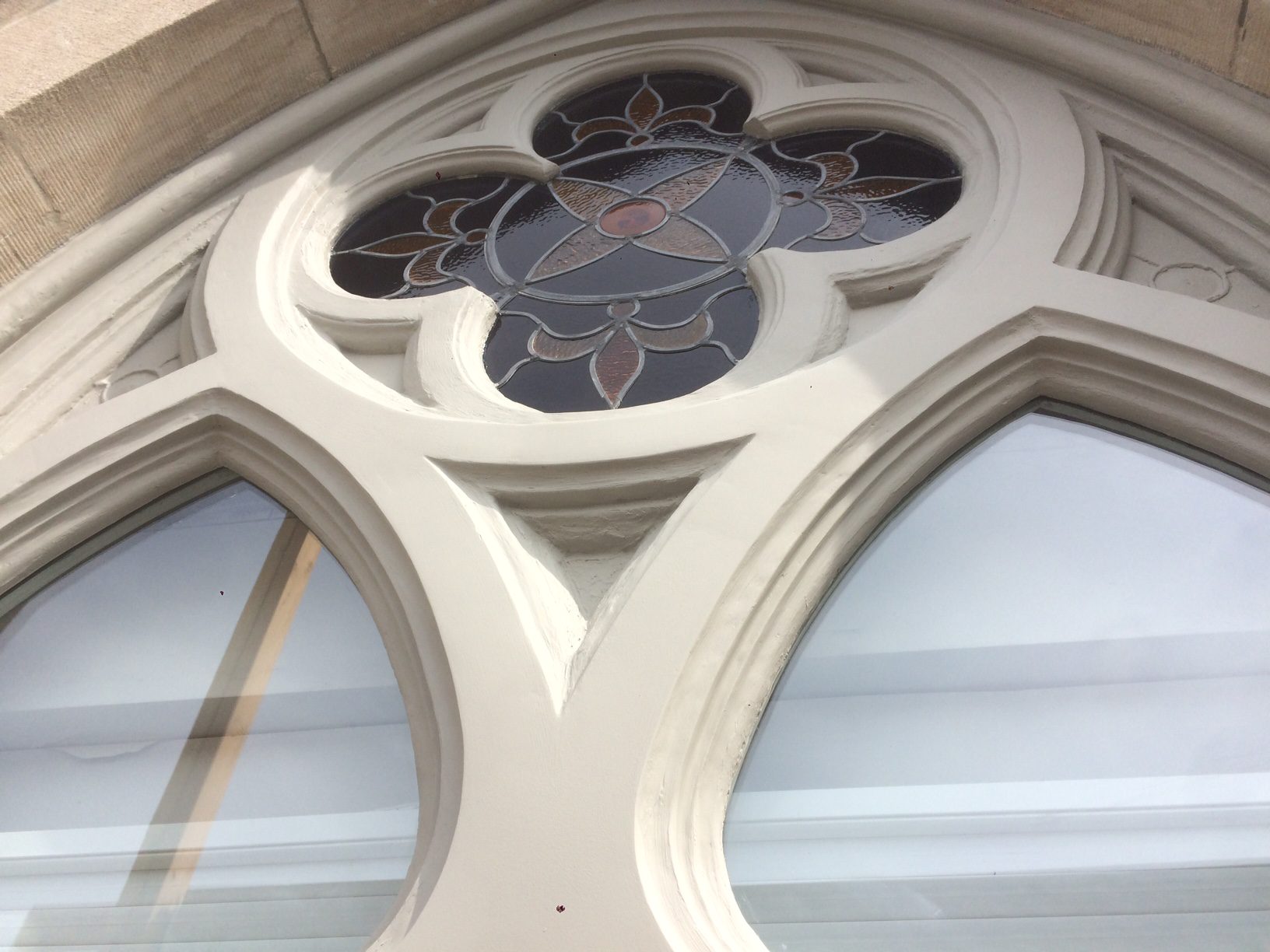
Scope of Work
- Restoration of 12 oversized wood windows, each 12 feet tall
- Removal and repair of rotted components and failed previous repairs
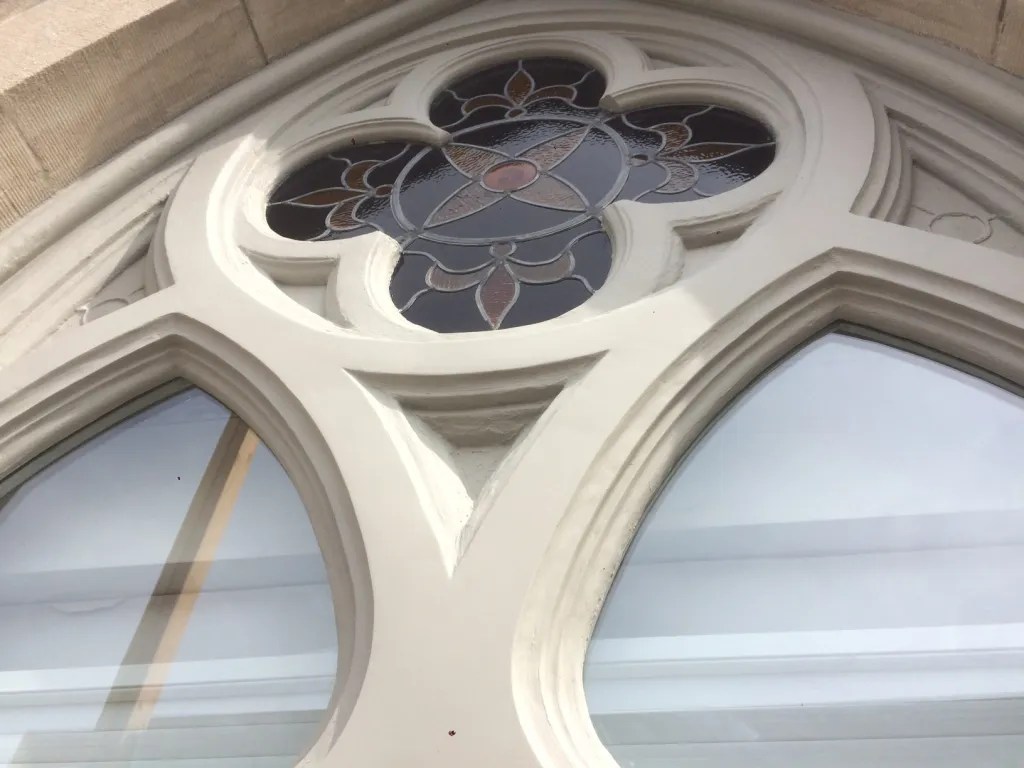
- Replacement of broken stained glass elements
- Installation of new custom mahogany brick molding to match original profiles
- Use of marine-grade epoxy and traditional Dutch patching techniques
- Setup of narrow scaffold system to accommodate tight working conditions
Points of Interest
- Use of custom knives to mill exact brick molding profiles for restoration accuracy
- Creative scaffolding solution allowed precision work in an ultra-narrow space
- Restoration brought 12-foot stained glass church windows back to functional beauty
Challenges
- Minimal work area required non-traditional scaffolding and logistical planning
- Body filler used in past repairs concealed deeper rot, only visible after sanding
- Accurate replication of intricate molding profiles for large-scale replacements
Materials & Techniques
- Materials Used
Original window wood, mahogany brick molding, stained glass panels, marine-grade epoxy, Benjamin Moore exterior paint - Techniques
Dutch patching, epoxy wood consolidation, custom molding replication, stained glass replacement, detailed surface restoration - Tools Used
Traditional machinery, custom knives, hand tools, sanding and glazing equipment, pump jack scaffold system - Waterproofing
New moldings and repairs primed, painted, and sealed for full weather resistance - Installation Notes
All work completed in-place due to access constraints; windows restored individually to ensure longevity and architectural fidelity



History of 251 DeGraw St.
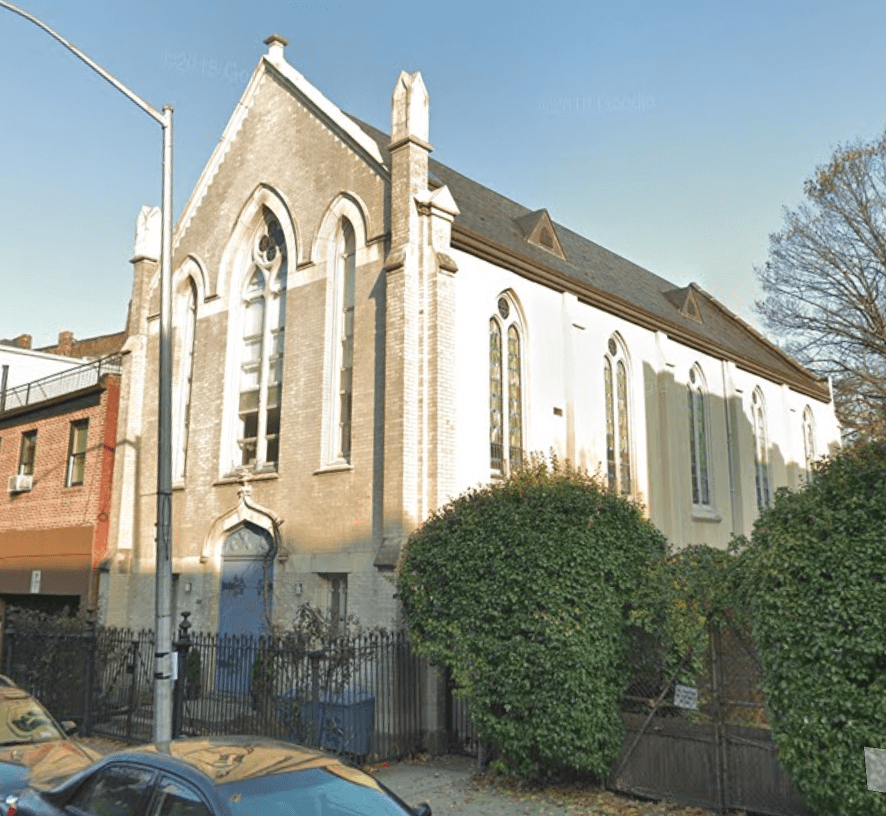
In 1905, 251 DeGraw Street was originally built as the Trinity German Lutheran Church. Theobald Englehardt designed the building in the Gothic Revival style. He was the son of German immigrants. The building is noted for its elegant lancet windows. It is also known for its molded ogee arch doorway and colorful stained glass. Curiously, the cornerstone is dated 1885, likely referencing an earlier congregation or structure on the site.
For decades, the building was recognized by its bright blue doors. Later, it became home to a Seventh Day Adventist congregation. Eventually, it was transformed into a private residence.
Building Information
Type of Building: Former Church, now Residential Duplex
Location: 251 DeGraw Street, Cobble Hill, Brooklyn, NY
Year Built: 1905
Architect: Theobald Englehardt
Restoration Completed: 2020s
Why the Work Was Needed
Even after its conversion into a duplex, many of the church’s architectural features—including its original 12-foot-tall stained glass windows—remained intact. However, years of wear and deferred maintenance left them in a severely decayed condition. What appeared solid under layers of paint was actually cracked, rotted, or patched with car body filler. Therefore, restoration was essential to preserve the character and functionality of these significant elements.
What We Did
Right Path Windows & Doors took on the task of restoring the massive window units. This included both the DeGraw Street facade and the narrow Clinton Street side yard. We worked in extremely tight quarters. We designed a pump jack scaffold system—just a few boards wide. This design allowed our crew to safely access the upper windows. It maximized usable space in the limited footprint.
Once we began removing paint and filler from the window frames, extensive underlying decay was revealed—particularly at the base of each unit. Much of the original wood had deteriorated beyond repair. It required Dutch patching or complete replacement using marine-grade epoxy filler. We scraped, sanded, and reinforced every surface. As a result, the windows became both structurally sound and historically sensitive.
We fabricated and installed new mahogany brick molding when restoring the bottom foot of the windows was impractical. The molding was milled with custom knives to exactly match the original profile. In addition, this approach offered a perfect visual match. Moreover, it provided a more reliable, weather-resistant solution. This would extend the life of the windows significantly.
Finally, broken stained glass pieces were carefully replaced. The experts used matching colors and textures to maintain the original artistic expression of the windows. The result is a fully restored facade that honors the building’s spiritual and architectural heritage.